REVIEW · PODGORICA
MONASTERY TOUR – Impressive Montenegrin Monasteries
Book on Viator →Operated by Mediterranean Journey · Bookable on Viator
Caves, cathedrals, convents, and a rock sanctuary in one day. What makes this tour work so well is the mix of very different sacred stops: a cross-shaped cave monastery, Podgorica’s modern Resurrection Cathedral, and the famous cliffside Ostrog Monastery. I especially like that it’s set up as a private tour, so your pace and questions actually matter.
I also like the hands-on feel of the day: you get door-to-door pickup wherever you prefer, then an air-conditioned ride that keeps the day from turning into a logistics puzzle. One consideration: Ostrog can be crowded, so plan for a bit of waiting and crowd flow around the main rock complex.
In This Review
- Key Points at a Glance
- A Monastery Circuit That Actually Makes Sense in Montenegro
- Private Pickup and the Air-Conditioned Ride (7 Hours of Doing It Right)
- Stop 1: Dajbabe Monastery’s Cross-Shaped Cave Setup
- Stop 2: Saborni Hram Hristovog Vaskrsenja in Podgorica
- Stop 3: Ždrebaonik Monastery and the Work of Icon-Making
- Stop 4: Ostrog Monastery at 900 Meters and the Crowds Factor
- Guides Make or Break This Kind of Day Trip
- Price and Value: What $132.53 Buys You (and What You Skip)
- Pacing, Breaks, and How to Get the Most Out of 4 Stops
- Who Should Book This Montenegro Monastery Tour
- Should You Book This Tour?
- FAQ
- How much does the tour cost?
- How long is the monastery tour?
- Do you offer pickup?
- Is the tour private?
- What language is the tour offered in?
- What’s included in the price?
- Are entrance or admission tickets included?
- What isn’t included, and what happens with cancellation or bad weather?
- When will I receive confirmation?
Key Points at a Glance
- A tight loop of Montenegrin spiritual landmarks: Dajbabe, the Podgorica cathedral, Ždrebaonik, and Ostrog in one circuit.
- Private format with English-speaking guidance: only your group, so you can ask follow-up questions.
- Entrance is free at the listed stops: admission ticket free for each monastery/church on the schedule.
- Options for departures beyond Podgorica: choose timing, and there’s an option from Kotor or Budva.
- Guides who slow things down for real understanding: lots of praise for pacing and explanations (for example Ivan, Tamara, Moawyah, Darko, and Lidia).
- Ostrog crowds are real: the day’s finale can mean more people on site than you expect.
A Monastery Circuit That Actually Makes Sense in Montenegro
If you only do one day trip built around religion and architecture in Montenegro, do it with intention. This tour is built for that. You’re not bouncing randomly from one landmark to another. Instead, you get a clear sequence that moves from older, underground devotion to modern church design, then to women’s monastic life, and finally to the cliffside pilgrimage magnet that is Ostrog.
The value is in how the stops “talk” to each other. Dajbabe shows devotion shaped by natural rock and human adaptation. Podgorica’s cathedral brings you to the modern visual language of Christianity in Montenegro. Ždrebaonik adds another layer by focusing on monastic routine and icon work. Then Ostrog finishes with the kind of pilgrimage energy that draws people of all backgrounds—part faith stop, part cultural stop.
And because it’s private, you’re not stuck absorbing everything through a crowd’s shoulder blades. You’ll get time to ask what you’re seeing, not just what you’re supposed to photograph.
You can also read our reviews of more tours and experiences in Podgorica.

Private Pickup and the Air-Conditioned Ride (7 Hours of Doing It Right)
This day is timed for about 7 hours total. That matters, because monastery sites can be spread out, and you don’t want the “time cost” to eat your experience.
You also get pickup wherever you prefer, and the tour uses an air-conditioned vehicle. That’s a small detail until you’re driving through hot weather and you realize you’re not rushing from one door-to-door transfer to the next. The ride is also part of the experience. With guides like Ivan and Tamara, the car time becomes story time—history, culture, and how people understand their own landscape.
Another practical win: you can choose from several tour times to match your schedule. If you’re sensitive to crowds, timing matters—especially for Ostrog.
Stop 1: Dajbabe Monastery’s Cross-Shaped Cave Setup
You start at Monastery Dajbabe, described as a place made by man and nature working together. The feature here is unusual: it’s an adapted cave, carved into rock in the shape of a cross. That instantly changes what you’re looking at. You’re not seeing a “standalone building.” You’re stepping into a space where the rock itself becomes part of the symbolism.
Expect about 1 hour at Dajbabe. The pacing is usually comfortable here—this is a good first stop because it sets the tone. You arrive, you slow down, and you get oriented before the day ramps up.
One small practical note: cave-like spaces can feel cooler or dimmer. Bring your eyes with you. Don’t wait for perfect photos to start noticing details.
Stop 2: Saborni Hram Hristovog Vaskrsenja in Podgorica
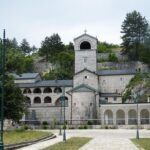
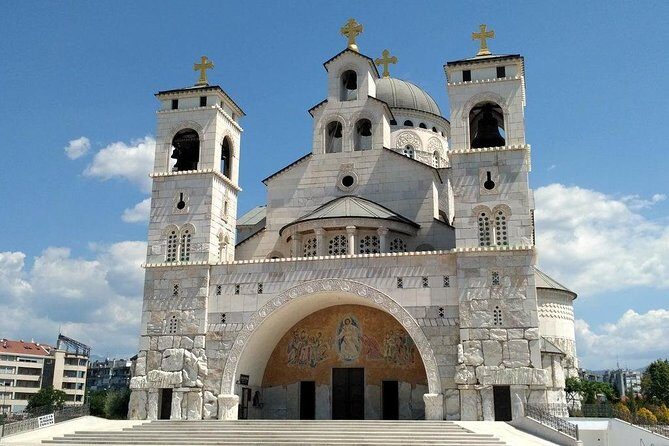
After Dajbabe, you move to Saborni Hram Hristovog Vaskrsenja—the Gathering Church of Christ’s Resurrection in Podgorica. This stop is there to show the connection between old and new sacred symbolism, and it does that through its monument and architecture.
What I’d want you to notice is the time scale. It took 20 years to finish the cathedral, using techniques that weren’t in use for 8 centuries. That’s a big clue about what you’re looking at: modern construction decisions tied to older traditions.
Plan around 45 minutes here. This is the kind of stop where a good guide changes everything. Ivan-style passion or Tamara-level clarity can help you interpret the design choices instead of just admiring the exterior.
Also, it’s a nice “reset” stop between the cave atmosphere and the monastic life you’ll see later.
Stop 3: Ždrebaonik Monastery and the Work of Icon-Making
Next up is Ždrebaonik Monastery near Danilovgrad. The story attached to this place carries real weight. It was burned and demolished in wars repeatedly in this area, yet it still stands. That survival changes how you read the walls. You’re not seeing an “old site” only for beauty. You’re seeing persistence.
This is about 1 hour, and it’s framed as a women’s monastery with multiple parts:
- library
- dormitories
- and a place where nuns make icons and souvenirs
That last point matters for your visit. It’s not only about viewing. It’s about seeing how religious life becomes craft, routine, and transmission of meaning through artwork.
If you like monasteries that feel lived-in, this is often the stop people remember most besides Ostrog. The setting also tends to feel calmer than the cliffside pilgrimage rush.

Stop 4: Ostrog Monastery at 900 Meters and the Crowds Factor
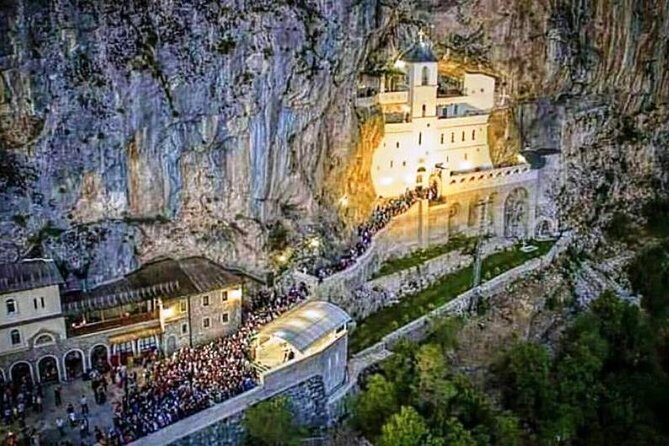
You finish at Ostrog Monastery, one of the most visited pilgrimage sites in the Balkans. It’s carved into steep rocks and sits about 900 meters above sea level. The view and the setting are part of why it draws such devotion.
The schedule gives about 1 hour 40 minutes at Ostrog. That’s enough time to take in the main areas and still have moments where you can actually look, not just walk.
Now the consideration: Ostrog can be crowded, and one of the only “real complaints” that comes up is crowd pressure at the site. If you’d like a more breathable experience, you can help yourself by staying patient, moving slowly, and keeping your attention on the details around you instead of timing everything to the minute.
Also, Ostrog is known for healing and spiritual changes people believe they experience there. Whether you’re religious or just curious about pilgrimage culture, the vibe is distinctive: people come with stories, not just cameras. Guides who know the flow (like Tamara and Moawyah from feedback you might recognize) can help you avoid the worst of the congestion by pacing your visit sensibly.
Guides Make or Break This Kind of Day Trip
This tour’s reviews are full of praise for guides adjusting the day. Names that show up repeatedly include Ivan, Tamara, Moawyah/Moawiyah, Darko, and Lidia.
A few patterns you should care about:
- Clear English and good storytelling: Tamara is repeatedly mentioned for perfect English. Lidia is mentioned for Spanish as well.
- Good timing and calm driving: Moawyah is praised for friendly service and careful driving; Tamara is praised for being attentive and a highly skilled driver.
- Not rushing the holy sites: Ivan is described as passionate about history and completely unrushed.
- Conversation that goes beyond the monuments: Moawyah is mentioned as conversational across topics, not just monastic facts.
One review highlights something very practical: a guide helped an older guest with arthritic knee needs and even assisted with access gates so the person could get through comfortably. That’s a reminder to speak up. If you have mobility limits or specific pacing needs, tell the guide at the start. A private format helps because they can respond in real time.
Price and Value: What $132.53 Buys You (and What You Skip)
At about $132.53 per person for a roughly 7-hour private day, you’re paying for more than a map with pins. You’re buying:
- pickup wherever you prefer
- an air-conditioned vehicle
- a guide who explains what you’re seeing
- and all fees and taxes
On top of that, the stops listed show admission ticket free for each monastery/church on the route. That means you’re not juggling cash for entrance charges mid-day. You’re spending your mental energy where it belongs: understanding the sites and enjoying the ride between them.
You do pay for your own personal expenses. So budget meals or snacks if you need them, and keep room for souvenirs—especially since Ždrebaonik explicitly includes icon and souvenir making.
If you’re comparing day trips, this is one of those cases where the “price” can feel fair when you factor in guide time plus the transport convenience plus free entry. It’s not a cheap outing, but it’s also not a nickel-and-dime situation.
Pacing, Breaks, and How to Get the Most Out of 4 Stops
Four stops in seven hours is a workable rhythm. The tour doesn’t try to turn you into a checklist robot.
What helps most:
- Start slow at Dajbabe so you understand the cave setting before you move on.
- Use Podgorica’s cathedral as a modern-design contrast so your brain doesn’t overload.
- Treat Ždrebaonik as a human-scale stop: library, dormitories, icon-making.
- Save your energy for Ostrog. That’s where the crowd factor shows up.
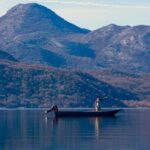
A number of guides also build in time to breathe, including sit-down breaks. One description mentions a break by a lake to talk and regroup, which is exactly what you want on a long day. If you need a slower pace or more frequent restroom stops, ask. Private tours are better at adapting.
Who Should Book This Montenegro Monastery Tour
You should consider booking if:
- you want one well-structured day focused on monasteries and sacred architecture
- you like the idea of learning stories behind what you’re seeing, not just taking pictures
- you value a private experience with pickup wherever you prefer
- you’re comfortable with the fact that Ostrog may be busy
You might choose something else if:
- you hate crowds and can’t handle any waiting at popular sites
- you’re looking for a pure nature tour, not a faith-and-heritage tour
This is also a good fit for first-timers in Montenegro who want the meaningful highlights without hiring separate taxis or trying to stitch together bus routes.
Should You Book This Tour?
If you want a guided Montenegro day that feels planned without feeling scripted, I’d book it. The combination of Dajbabe’s cross-shaped cave, Podgorica’s Resurrection Cathedral, Ždrebaonik’s women’s monastery, and cliffside Ostrog is a strong one-two-three-four sequence.
Just go in with the right mindset for the finale. Ostrog can be crowded. When it is, your best move is patience plus good pacing—which is exactly the kind of thing guides like Ivan, Tamara, and Moawyah are praised for.
Finally, think about value. With pickup, private format, air-conditioned transport, and entrance fees covered at the listed stops, the cost makes sense for a day that would be a hassle to self-drive on your own.
FAQ
How much does the tour cost?
It costs $132.53 per person.
How long is the monastery tour?
The duration is about 7 hours.
Do you offer pickup?
Yes. Pickup is offered, and the tour says you will be picked up wherever you prefer. There’s also an option for departure from Kotor or Budva.
Is the tour private?
Yes. This is described as a private tour/activity, and only your group participates.
What language is the tour offered in?
The tour is offered in English.
What’s included in the price?
The tour includes an air-conditioned vehicle and all fees and taxes.
Are entrance or admission tickets included?
The itinerary lists admission tickets as free for each of the stops (Dajbabe, Saborni Hram Hristovog Vaskrsenja, Ždrebaonik, and Ostrog).
What isn’t included, and what happens with cancellation or bad weather?
Personal expenses aren’t included. You can cancel for a full refund up to 24 hours in advance, and if the experience is canceled due to poor weather, you’ll be offered a different date or a full refund.
When will I receive confirmation?
Confirmation is received within 48 hours of booking, subject to availability.